Top Standards for Hydraulic Equipment Manufacturing Buyers Should Know

Time:2026-11-01 Author:Henry
0%

Hydraulic equipment can look simple on a drawing: a pump, valves, hoses, and a cylinder. In production, small choices matter. A seal may face hot oil, a hose may flex thousands of times, and contamination can shorten component life. Buyers need to ask not only which standards apply to hydraulic equipment manufacturing, but also how each requirement fits the machine’s intended use and market.

ISO 4413 provides general safety requirements for hydraulic fluid power systems. ISO 12100 supports machinery risk assessment, while ISO 4406 classifies fluid contamination levels. ISO 9001 may guide a supplier’s quality management, but certification alone does not prove that a specific assembly meets every technical need. Herbert E. Merritt, author of Hydraulic Control Systems, offers a useful systems-level perspective: his work emphasizes evaluating hydraulic components in relation to the wider control system. This is a paraphrase, not a direct quotation. That distinction matters.

Look closely. Ask suppliers for design records, test results, material traceability, and clear explanations of applicable standards. Check whether requirements change with operating pressure, temperature, fluid, or installation environment. A clean certificate is useful, but it cannot replace sound engineering review. Even a careful checklist can miss a detail; buyers should verify assumptions with qualified engineers and the relevant standards’ current editions.
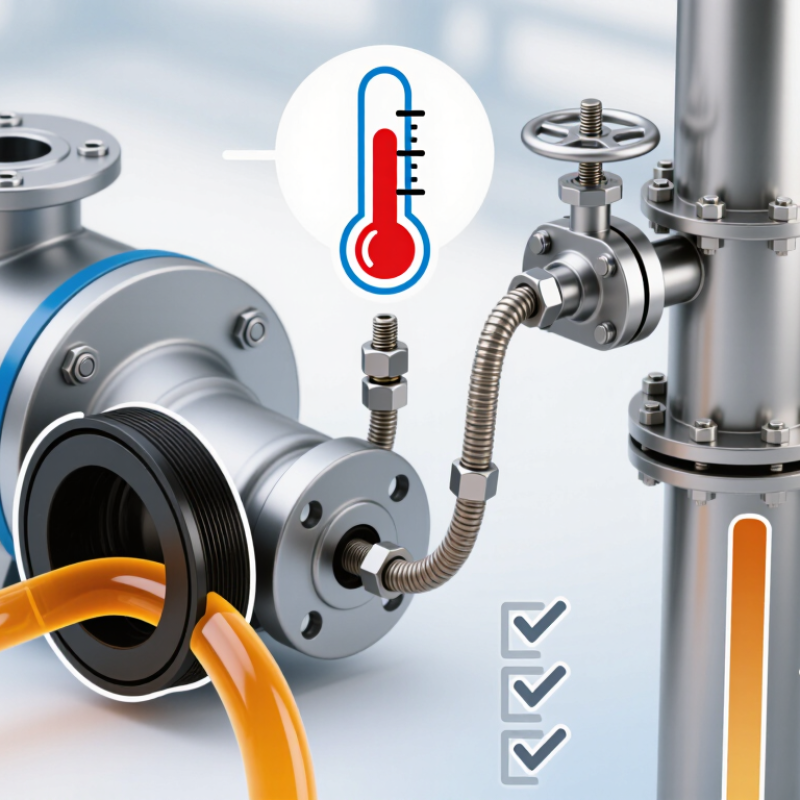
Top Standards for Hydraulic Equipment Manufacturing Buyers Should Know

Understanding the Scope of Hydraulic Equipment Standards

Hydraulic equipment standards define what buyers should examine across a complete system, not just individual components. ISO 4413 sets general safety requirements for hydraulic fluid power systems and their components. Its scope reaches design, construction, modification, and information supplied for safe use. That distinction matters. A correctly rated valve cannot compensate for an unsuitable hose, poor pressure control, or unclear maintenance instructions.

Standards also touch energy use, though safety and efficiency are not interchangeable. The U.S. Department of Energy’s Improving Pumping System Performance: A Sourcebook for Industry reports that pumping systems use nearly 20% of global electricity demand. It also estimates they account for 25–50% of energy use in some industrial operations. These figures describe pumping systems broadly, not hydraulic equipment alone. Buyers can still use them to ask how pump selection, operating pressure, and leakage affect energy performance.

For a practical review, check pressure ratings, fluid compatibility, hose specifications, relief-device settings, and test records. Confirm that documents match the actual operating conditions, including temperature and duty cycle. Ask how failures are detected and what maintenance intervals assume. Paper compliance can miss a poorly assembled system. Standards guide decisions; they do not replace careful inspection or clear supplier evidence. One detail is easy to overlook: the same component may behave differently after installation in a changed system.

Identifying Applicable Safety and Performance Requirements

Buyers should begin with the machine’s actual hazards, not a supplier’s standards list. ISO 12100 provides a framework for machinery risk assessment, while ISO 4413 covers safety principles for hydraulic fluid-power systems. These references help frame requirements; they do not replace local rules or application-specific engineering. Check the editions and regulations relevant to the equipment’s destination and intended use.

Then compare operating conditions with documented limits. Record maximum working pressure, pressure spikes, duty cycle, fluid type, ambient temperature, and expected contamination. Ask for evidence covering pressure testing, leakage, fatigue life, and cleanliness—not just a nominal rating on a data sheet. A valve rated for steady pressure may behave differently during repeated shock loads. Small details matter.

Review guarding, hose routing, stored-energy isolation, labels, and service instructions alongside performance figures. Request test methods, acceptance criteria, calibration records, and traceability for critical components. During qualification, compare results with the real duty cycle and inspect a sample under realistic conditions. Paperwork can look complete yet miss a poor connector fit or awkward maintenance access. Buyers sometimes focus too heavily on certificates; that is worth questioning. A practical review catches gaps before installation, though it cannot predict every field condition.

Reviewing Material, Design, and Manufacturing Standards

When evaluating hydraulic equipment, buyers should look beyond a stated pressure rating. Material records can confirm the alloy, heat treatment, and traceability of pressure-containing parts. Check whether seals and hoses suit the specified fluid, temperature range, and operating pressure. Small mismatches matter. A seal may perform well on a test bench yet swell after prolonged exposure to the actual fluid.

Design standards help buyers assess safety and serviceability. ISO 4413 provides requirements for hydraulic fluid power systems, while ISO 12100 offers a framework for machinery risk assessment. Ask how these principles are reflected in guarding, pressure relief, emergency stops, and maintenance access. A compact assembly may save space but leave little room for replacing a filter. That trade-off deserves a closer look. Standards do not replace application-specific engineering.

Manufacturing controls matter just as much. Request inspection plans, pressure-test records, and relevant material certificates. For welded components, clarify how weld quality is verified; for cleanliness, ask how flushing and particle measurement are documented. ISO 4406 can help describe fluid contamination levels, but the target should match the equipment and duty cycle. Records can be tidy while a process still has gaps. Review the evidence, confirm which standard editions apply, and discuss any deviations before approving production.

Checking Testing, Inspection, and Quality Assurance Practices

Hydraulic equipment buyers should inspect the test plan, not just the final certificate. Ask for pressure-test limits, hold time, acceptance criteria, and recorded results for the exact unit or production lot. A pass mark without the measured pressure and duration tells you little. Check that test gauges have current, traceable calibration records. For cleanliness, request fluid-particle results reported using ISO 4406 codes, with sampling points and flushing conditions stated. ISO 4413 also sets general requirements for hydraulic systems, including safety-related design and verification.

The ISO Survey of Management System Standard Certifications 2022 reported 1,265,216 valid ISO 9001 certificates across 188 countries and economies. That scale shows widespread adoption, not proof that every unit is well tested. Ask how the manufacturer controls nonconforming parts, investigates failures, and verifies corrective actions. Review a sample test record: serial or lot number, operator, date, measured values, and instrument identification should be clear. Not enough? Request a witnessed test for critical equipment, especially where pressure spikes or leakage could damage nearby components. One imperfect record may be a paperwork mistake, but repeated gaps deserve closer scrutiny.

Top Standards for Hydraulic Equipment Manufacturing Buyers Should Know — Checking Testing, Inspection, and Quality Assurance Practices

Quality Area Standard or Reference What Buyers Should Verify Useful Inspection Evidence Acceptance Basis
Hydraulic system design and safety ISO 4413 — Hydraulic fluid power: general rules and safety requirements for systems and their components System design, component selection, installation, adjustment, and maintenance provisions address applicable hydraulic hazards and operating conditions. Design review records, circuit diagrams, risk-control documentation, assembly instructions, and final inspection reports. Applicable ISO 4413 requirements and the approved design, operating conditions, and purchase specification.
Machinery risk assessment ISO 12100 — Safety of machinery: risk assessment and risk reduction Hazards are identified and risks are evaluated throughout relevant lifecycle stages; risk-reduction measures are documented. Risk assessment, hazard list, design-review minutes, and verification of implemented protective measures. The documented risk-reduction process and applicable product and regulatory requirements.
Quality management system ISO 9001 — Quality management systems: requirements Controls are in place for supplier purchasing, production, inspection, nonconformities, corrective action, and measurement resources. Quality procedures, process records, calibration records, internal audit results, and corrective-action documentation. Applicable ISO 9001 requirements and the buyer’s quality agreement. Certification scope and validity should be checked where certification is claimed.
Hydraulic fluid cleanliness ISO 4406 — Hydraulic fluid power: method of coding the level of contamination by solid particles Fluid cleanliness is reported using the ISO 4406 particle-count code and evaluated against the cleanliness target specified for the equipment. Fluid sample results, sampling point and method, laboratory or counter details, and flushing records. The cleanliness code specified by the equipment design or purchase specification; ISO 4406 defines the coding method, not one universal cleanliness limit.
Particle-counter measurement ISO 11171 — Hydraulic fluid power: calibration of automatic particle counters for liquids Where automatic particle counts are used, the counter’s calibration status and suitability for the reported measurements are documented. Calibration certificate, instrument identification, calibration due date, and test report. Valid calibration and measurement controls appropriate to the test method and cleanliness requirement.
Filter performance ISO 16889 — Hydraulic fluid power: multi-pass method for evaluating filtration performance of a filter element Filter-element performance claims are supported by testing using the applicable multi-pass method and clearly stated test conditions. Test report identifying the element, test fluid, test conditions, particle-count data, and reported filtration performance. The specified filter performance and the declared test conditions; a filter rating should not be treated as a cleanliness guarantee for the complete system.
Pressure-containing component fatigue ISO 10771-1 — Hydraulic fluid power: fatigue pressure testing of metal pressure-containing envelopes Applicable metal pressure-containing components are evaluated by pressure-fatigue testing under defined test conditions. Test plan and report stating the specimen, pressure cycle, test conditions, cycle count, and inspection results. The component design requirements and agreed test plan; required pressures and cycles depend on the application and specification.
Hose-assembly pressure impulse resistance ISO 6803 — Rubber or plastics hoses and hose assemblies: hydraulic-pressure impulse test without flexing Where required, hose assemblies are tested for pressure-impulse endurance using the applicable method and defined test conditions. Test report identifying the hose assembly, pressure and temperature conditions, impulse frequency, cycle count, and post-test condition. The applicable hose specification or purchase requirement; test conditions and required cycles should be agreed for the intended service.
Hose and hose-assembly inspection ISO 6605 — Hydraulic fluid power: test methods for hoses and hose assemblies Relevant hose and assembly properties are tested using applicable methods, with traceability to the tested construction and batch. Inspection and test reports, batch or lot identification, dimensional checks, and records of any required performance tests. The applicable product specification and agreed test methods; not every test in the standard applies to every product.
Production pressure testing Approved drawings, component requirements, and purchase specification Test boundaries, pressure, duration, medium, safety controls, and pass/fail criteria are defined before testing. Leaks, deformation, or other defects are assessed against documented criteria. Serial- or batch-linked test record, calibrated gauge identification, actual test readings, operator, date, and disposition of failures. Values and acceptance criteria specified for the particular assembly. There is no single proof-test pressure or duration suitable for all hydraulic equipment.
Final inspection and traceability Approved inspection and test plan (ITP) Critical dimensions, materials, component identification, assembly condition, cleanliness, and required functional checks are verified before release. Signed inspection checklist, material and component records, nonconformance dispositions, and final release documentation. Approved drawings, applicable standards, agreed ITP hold points, and purchase-order requirements.

Buyer’s note: Confirm the applicable edition, scope, and contractual requirements for each standard. Test limits, cleanliness targets, and inspection frequency should be defined for the specific equipment and service rather than assumed to be universal.

Evaluating Certification, Documentation, and Supplier Compliance

Hydraulic equipment buyers should treat certification as evidence to verify, not a shortcut to supplier approval. Check the certificate’s scope, issuing body, validity dates, and production site. ISO 9001 confirms a quality-management system; it does not certify a specific pump’s pressure rating or service life. ISO’s 2022 Survey of Management System Standard Certifications recorded 1,265,216 valid ISO 9001 certificates across 183 countries. That scale makes scope checks essential: a valid certificate may not cover the factory making your equipment.

Documentation connects claims to delivered parts. Request material records, calibration status, pressure and leakage test results, and inspection criteria. Match serial numbers and drawing revisions across the quotation, test report, and shipment. For hydraulic safety requirements, ask how the supplier applies ISO 4413 to the equipment’s design and validation. Paperwork matters. Missing revision details can turn a sound test into weak evidence.

Tips: Ask for a sample traceability pack before placing an order. Confirm who approves deviations and how nonconforming parts are contained. Check audit findings and corrective-action dates, not just a compliance checklist. A polished file is not proof by itself. I have seen documentation gaps persist even when a supplier’s process appears orderly; buyers should verify a few records against actual components.

FAQS

What operating details should buyers record before selecting hydraulic equipment?

Record working pressure, pressure spikes, duty cycle, fluid type, ambient temperature, and expected contamination. Small details matter.

Which safety references can help frame a machinery review?

ISO 12100 supports machinery risk assessment, while ISO 4413 covers hydraulic system safety principles. Check applicable editions and local requirements.

What test evidence should buyers request?

Ask for pressure limits, hold times, acceptance criteria, and measured results for the exact unit or production lot. A pass mark alone tells little.

How can buyers check whether pressure testing is reliable?

Review gauge calibration records and confirm the test includes realistic pressure conditions. Request a witnessed test for critical equipment when practical.

What cleanliness information should a supplier provide?

Request fluid-particle results using ISO 4406 codes. Check that sampling points and flushing conditions are also documented.

What should a useful test record include?

Look for the serial or lot number, operator, test date, measured values, and instrument identification. Missing details deserve a follow-up.

What physical features should buyers inspect besides performance figures?

Review guarding, hose routing, stored-energy isolation, labels, and service access. Inspect a sample under realistic conditions; awkward fittings can be easy to miss.

Does a quality certificate prove that every unit was tested well?

No. Certification shows a management system is in place, not that every unit is flawless. Ask how failures and corrective actions are handled.

Can paperwork predict every problem in the field?

No. Records help reveal gaps, but they cannot capture every operating condition. A certificate can still leave questions.

Conclusion

Hydraulic equipment buyers need a clear understanding of the standards that shape safe, reliable, and consistent manufacturing. The first step is identifying which standards apply to hydraulic equipment manufacturing, since requirements may differ according to the equipment’s purpose, operating conditions, and intended market. Buyers should then review relevant safety and performance expectations, including how equipment is designed to operate under pressure and how its key functions are assessed.

A thorough supplier review also considers materials, design methods, and manufacturing controls, along with testing, inspection, and quality assurance practices. Buyers can ask how products are verified, what records are maintained, and whether the supplier’s certifications and documentation match the equipment being offered. Checking these areas helps buyers compare suppliers, clarify expectations, and make more informed decisions about the quality and suitability of hydraulic equipment.

Henry

Henry

Henry is a dedicated marketing professional with a profound expertise in the company's offerings. With years of experience in the industry, he possesses an impressive understanding of the market dynamics and consumer behaviors that drive success. Henry is committed to sharing his insights through......