Top 10 Industries That Rely on Hydraulic Machinery Systems

Time:2026-10-25 Author:Ethan
0%

Hydraulics rarely attract attention until a machine must lift, clamp, steer, or press with controlled force. This guide examines which industries rely on hydraulic machinery systems and why fluid power remains valuable. A compact excavator can swing several tonnes of steel through a muddy worksite. A factory press can repeat precise movements throughout a long production shift. These tasks demand force density, durability, and responsive control.

The evidence spans several sectors. The International Energy Agency’s World Energy Investment 2024 report estimated global energy investment above $3 trillion, supporting continued demand for construction and maintenance equipment. FAO’s Agricultural Outlook 2024–2033 also describes sustained pressure to improve farm productivity and resource efficiency. Those pressures encourage hydraulic tractors, harvesters, irrigation equipment, and material-handling systems. In manufacturing, the Association for Manufacturing Technology continues tracking automation investment, where hydraulic presses and forming machines remain important for heavy-duty production.

Market estimates vary widely. Grand View Research and MarketsandMarkets publish different hydraulic equipment forecasts because their categories are not identical. That limitation matters. Not every industrial actuator is hydraulic, and some systems now combine hydraulics with electric drives. The picture is not perfectly neat.

Still, operating experience shows a clear pattern. Hydraulic systems deliver high force from relatively compact components. They also require disciplined filtration, leak prevention, temperature control, and maintenance records. ISO 4413 provides widely recognized safety principles for hydraulic fluid power systems. This article compares ten industries through those practical requirements, industry data, and real equipment applications. It also considers where hydraulics remain efficient, where electrification is advancing, and where older assumptions deserve a second look.
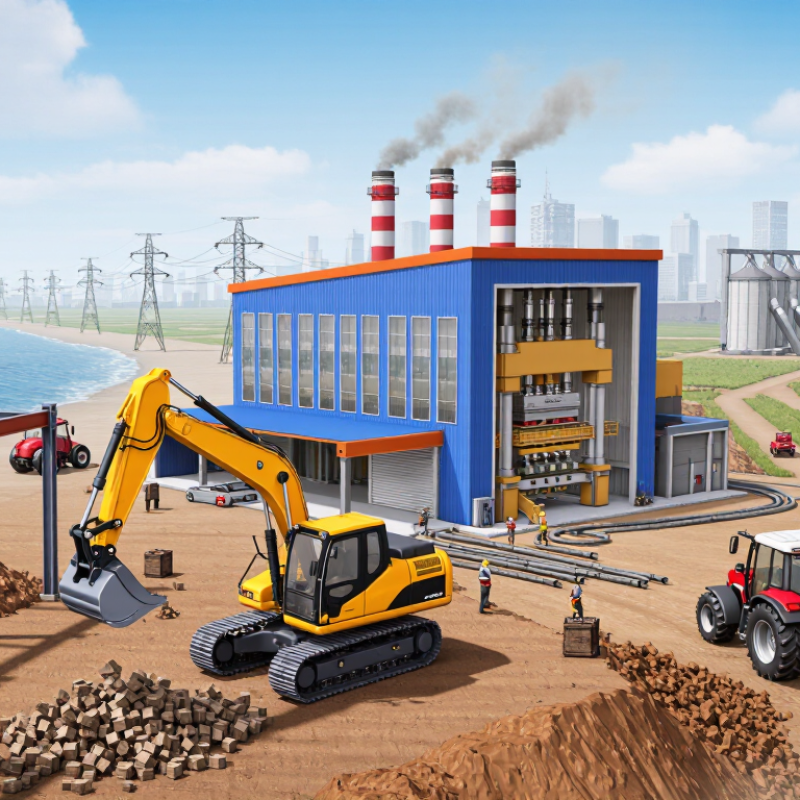
Top 10 Industries That Rely on Hydraulic Machinery Systems

Hydraulic Systems in Construction and Agriculture: Digging, Lifting, and Cultivation

Hydraulic machinery systems are central to modern construction, especially where force and precision must work together. Excavators use pressurized fluid to move booms, buckets, and tracks across uneven ground. A skilled operator can remove soil beside a buried pipe without damaging it. Hydraulic breakers can split concrete into manageable pieces. The work is powerful, but control matters more than speed.

Construction crews also depend on hydraulic lifts, loaders, cranes, and compactors. These machines raise steel beams, shift gravel, and prepare stable foundations. Regular inspections should include hoses, fittings, fluid levels, and cylinder seals. A small leak can reduce lifting strength and create a slippery work area. In practice, rushed maintenance remains a common weakness. Better checklists help, though they do not replace trained judgment.

Agriculture uses hydraulic systems for digging, lifting, and cultivation. Tractors adjust plow depth through hydraulic controls, while loaders move feed, soil, and harvested crops. Hydraulic arms can position seeders accurately across changing field conditions. This reduces physical strain and supports more consistent planting. However, compacted soil, dirty fluid, or poor calibration can weaken performance. Farmers often adapt quickly in the field, yet that flexibility can hide developing faults. A machine may still operate while quietly wasting energy and reducing crop quality.

Top 10 Industries That Rely on Hydraulic Machinery Systems

Hydraulic Systems in Construction and Agriculture: Digging, Lifting, and Cultivation

The chart compares representative nominal hydraulic system pressures commonly used in major hydraulic machinery industries. Construction and agriculture depend on hydraulic power for digging, lifting, steering, harvesting, and cultivation, while mining, aerospace, manufacturing, and offshore equipment often require higher-pressure systems. Actual pressure varies by machine design, operating load, and safety requirements.

Hydraulic Systems in Manufacturing and Mining: Production and Material Extraction

Top 10 Industries That Rely on Hydraulic Machinery Systems

Hydraulic systems remain central to manufacturing because they deliver controlled force in compact equipment. Presses, injection machines, lifting tables, and forming lines depend on stable pressure. Operators can feel the difference when oil temperature rises. Motion becomes slower and less predictable. The U.S. Department of Energy reports that industrial motor-driven systems consume a significant share of manufacturing electricity, making efficient hydraulic design increasingly important. Variable-displacement pumps, leak monitoring, and heat recovery can reduce wasted energy.

Mining places even greater demands on hydraulic machinery. Excavators, drilling rigs, crushers, loaders, and underground roof supports must work through dust, vibration, and uneven ground. The U.S. Geological Survey’s Mineral Commodity Summaries 2025 estimates global iron ore mine production at roughly 2.4 billion metric tons in 2024. That scale requires powerful and serviceable equipment. Hydraulic cylinders convert pump pressure into digging force, while proportional valves help operators control bucket movement near rock faces. Small faults matter.

Maintenance remains the weak point. A contaminated filter can damage valves, reduce pressure, and stop production. ISO 4413 recommends cleanliness, safe pressure control, and systematic inspection for hydraulic systems. In practice, some sites still replace parts only after failure. That approach is expensive. It also hides recurring design problems. The International Energy Agency’s Global Critical Minerals Outlook 2024 shows rapidly growing demand for minerals such as lithium, copper, and nickel. Mining equipment will face longer operating hours and tougher efficiency expectations. Better diagnostics help, but they cannot replace disciplined inspection.

Hydraulic Systems in Oil and Gas and Energy: Control, Drilling, and Power

Hydraulic systems remain central to oil and gas operations because they deliver force in compact, hazardous environments. The Energy Institute’s Statistical Review of World Energy 2024 recorded global oil consumption above 100 million barrels per day in 2023. That scale demands reliable drilling controls, valve actuation, wellhead equipment, and emergency shutdown systems. During drilling, hydraulic power moves heavy components while giving operators precise pressure control.

Pressure matters. A small leak can reduce response speed, increase heat, and expose workers to serious equipment risks.

Energy infrastructure also depends on hydraulics beyond petroleum. Hydropower plants use hydraulic governors, gate actuators, and braking systems to regulate water flow and turbine speed. Offshore wind equipment can use hydraulic pitch and yaw mechanisms, especially where large loads and severe weather challenge mechanical systems. The International Energy Agency reported approximately 510 GW of renewable capacity additions in 2023. More generation capacity means more demand for dependable control systems, including hydraulic solutions in difficult locations.

Reliability depends on more than maximum pressure ratings. Field maintenance records often point to contamination, aging seals, poor filtration, and unstable temperatures. Small details matter. Engineers should connect pump selection, fluid cleanliness, sensor calibration, and emergency procedures from the design stage. Yet hydraulic systems are not automatically the best answer. Electric actuation may reduce maintenance in some areas, while hydraulics still offer greater force density elsewhere. That distinction deserves more honest evaluation. A powerful system can still fail quietly when inspection routines become paperwork instead of practice.

Hydraulic Systems in Transportation and Marine Operations: Motion and Steering

Hydraulic systems convert controlled fluid pressure into practical movement across transport and marine operations. In buses, trucks, rail equipment, and port machinery, compact actuators move ramps, lifting decks, stabilizers, and access platforms. Marine steering systems use hydraulic power to turn rudders or azimuth units, even when loads change suddenly. The operator feels this as smoother control, not raw mechanical effort. That distinction matters during docking, loading, or emergency maneuvering.

Reliable performance starts with clean fluid, correctly sized hoses, and stable pressure. A small leak can reduce steering response and create a slippery work area. Small leaks matter. Contamination is equally serious. Fine particles damage valves, while overheated fluid weakens seals.

Technicians should check reservoir levels, hose abrasion, cylinder rods, filters, and unusual pump noise. Pressure tests must follow approved procedures and safe isolation practices. Never treat a quiet system as a healthy one.

From practical inspections, response time often reveals problems before gauges do. A steering wheel that feels heavy, delayed, or uneven deserves immediate attention. So does a platform that settles after lifting. Pressure can drift. Redundant circuits can improve control, but they add maintenance points and hidden failure paths. This is easy to underestimate. I would record temperature, load, weather, and operating symptoms during each inspection. Data supports better decisions, although it cannot replace trained judgment. Hydraulic machinery remains powerful, but its weaknesses are ordinary: worn seals, neglected filters, and assumptions.

Hydraulic Systems in Aerospace and Waste Management: Safety and Material Handling

Top 10 Industries That Rely on Hydraulic Machinery Systems

In aerospace, hydraulic systems control landing gear, flight surfaces, cargo doors, and service lifts. These systems move heavy components inside strict space and weight limits. A small fluid leak can reduce pressure, contaminate sensitive equipment, or create a slipping hazard. Safety depends on clean hydraulic fluid, correctly rated hoses, and documented inspections. Technicians check fittings, pressure readings, emergency shutoffs, and visible wear before servicing aircraft. Clean fluid matters. Redundancy improves reliability, but it does not remove risk. A missed seal can become a serious failure during demanding operations.

Waste management depends on hydraulics for compactors, balers, container lifters, sorting grabs, and loading platforms. These machines handle uneven loads, sharp materials, and constant vibration. Guards and interlocks help protect workers near pinch points. Pressure relief valves limit dangerous force when materials jam. Operators also need clear load limits and stable ground conditions. Dust can hide damaged hoses. That detail is easy to overlook. Regular cleaning, leak checks, and maintenance logs support safer material handling and reduce unplanned downtime.

The practical weakness is human inconsistency. A rushed inspection may miss abrasion beneath a protective sleeve. Maintenance teams should isolate stored pressure before repairs and verify every control response afterward. Training must reflect actual site conditions, not only classroom diagrams. In both industries, reliable hydraulic performance comes from engineering controls, disciplined procedures, and honest reporting of near misses.

FAQS

How do hydraulic systems help construction equipment?

Pressurized fluid moves excavator booms, buckets, and tracks. This allows controlled digging on uneven ground. Precision matters more than speed. A careful operator can work beside buried pipes with less damage risk.

Which construction machines commonly use hydraulics?

Hydraulic lifts, loaders, cranes, breakers, and compactors are common examples. They raise steel beams, move gravel, break concrete, and prepare foundations. Each machine needs suitable pressure and stable fluid flow.

What should workers inspect during hydraulic maintenance?

Inspect hoses, fittings, fluid levels, filters, and cylinder seals. Look for wet spots near connections. Small leaks matter. They can reduce lifting strength and create slippery work areas.

How are hydraulic systems used in agriculture?

Tractors use hydraulic controls to adjust plow depth. Loaders move feed, soil, and harvested crops. Hydraulic arms position seeders across changing field conditions. This reduces physical strain and supports consistent planting.

What can reduce agricultural hydraulic performance?

Compacted soil, dirty fluid, and poor calibration can weaken performance. A machine may still operate while wasting energy quietly. Crop quality can decline before the fault becomes obvious. That possibility deserves attention.

Why are hydraulic systems important in manufacturing?

They provide controlled force in compact equipment. Presses, forming machines, injection equipment, and lifting tables rely on stable pressure. Rising oil temperature can slow movement. The motion may become less predictable.

How do hydraulic systems support mining operations?

Excavators, drilling rigs, crushers, loaders, and roof supports use hydraulic power. Cylinders convert pump pressure into digging force. Proportional valves help control buckets near rock faces. Dust and vibration make maintenance harder.

What are the consequences of contaminated hydraulic fluid?

Contaminated fluid can damage valves and reduce pressure. Filters may clog and stop production. Replacing parts only after failure is expensive. It also hides repeated design problems. Maintenance plans are helpful, but judgment still matters.

Conclusion

Hydraulic machinery systems are essential across many sectors because they provide controlled force, smooth movement, and reliable performance under demanding conditions. In construction and agriculture, hydraulic power supports digging, lifting, earthmoving, harvesting, and cultivation tasks. Manufacturing and mining operations use these systems to operate presses, shape materials, move heavy loads, and assist with extraction processes. In oil and gas and the broader energy sector, hydraulics contribute to equipment control, drilling operations, and power management.

Transportation and marine operations depend on hydraulic systems for steering, braking, lifting, and coordinated motion in vehicles and vessels. Aerospace applications use lightweight, high-precision hydraulic equipment to support flight control, landing, and safety functions, while waste management relies on hydraulic machinery for collection, compaction, sorting, and material handling. Understanding which industries rely on hydraulic machinery systems highlights how widely this technology supports productivity, safety, and efficient movement across modern infrastructure and industrial activities.

Ethan

Ethan

Ethan is a seasoned marketing professional with a deep expertise in our company's innovative product line. With a passion for sharing knowledge and insights, he takes the lead in regularly updating our corporate blog, where he explores industry trends, product features, and effective marketing......