Hydraulic systems rarely fail because of one dramatic part. More often, a small weakness spreads through the circuit. A contaminated filter restricts flow. A worn pump loses pressure. A damaged seal allows heat and leakage to grow. This is why engineers must ask, “which components are critical in hydraulic systems,” before selecting replacements or increasing operating pressure.
Dr. Noah D. Manring, a respected hydraulic researcher and author, has emphasized: “A hydraulic system is only as reliable as its weakest component.” That principle remains practical in 2026. The pump creates flow, but the relief valve controls dangerous pressure. Directional valves manage movement, while actuators convert fluid power into useful force. Reservoirs support cooling and air separation. Filters protect every downstream component. Hoses and fittings also deserve attention, especially near vibrating machinery.
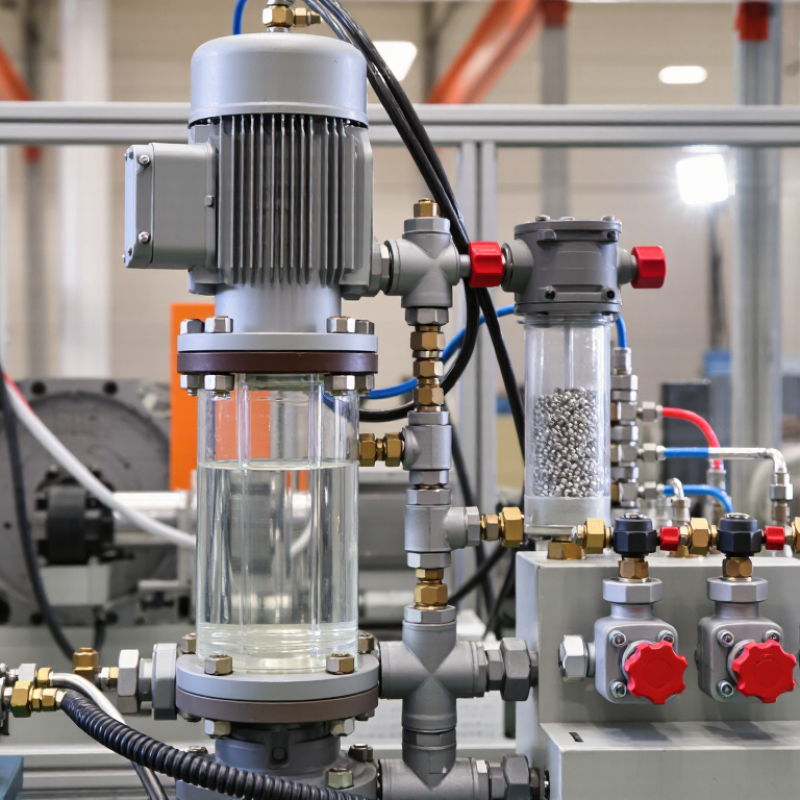
The details are visible on a factory floor. A warm reservoir may signal poor cooling. A whining pump may indicate cavitation. Fine metallic particles inside a filter can reveal internal wear. These clues should not be ignored.
Still, no component works alone. A high-quality valve cannot compensate for dirty oil. A strong cylinder cannot correct incorrect pressure settings. Some system designs also prioritize compactness over service access, which can create costly maintenance delays. That choice deserves reflection.
This guide examines the critical components, their roles, common failure symptoms, and selection considerations. It also connects component quality with safety, efficiency, maintenance experience, and long-term reliability. The goal is not to promote one brand. It is to help readers make defensible engineering decisions.
What Makes a Hydraulic System Component Critical in 2026
A critical hydraulic component protects uptime, safety, and measurable energy performance. It must perform under pressure, contamination, heat, and frequent cycling. Pumps remain essential, but valves, filters, seals, hoses, accumulators, and sensors increasingly determine total system reliability. The 2024 Grand View Research analysis projected the hydraulic equipment market to grow at roughly 4.8% annually through 2030. Growth alone is not enough. Component quality and maintainability matter more.
Filtration deserves special attention. A pressure-compensated pump cannot survive dirty oil for long. Fine particles can damage valve spools, enlarge clearances, and increase leakage. ISO 4406 cleanliness codes help technicians measure this risk consistently. Sensors also become critical in 2026. Pressure, temperature, and vibration data can reveal a blocked filter before production stops. The practical detail is simple: a sensor near the return filter may prevent hours of troubleshooting.
Small failures become expensive.
A 2023 report from MarketsandMarkets identified condition monitoring and connected hydraulic systems as important growth areas. Yet digital monitoring does not replace basic inspections. A loose hose fitting still leaks. A hardened seal still fails. Engineers should select components according to duty cycle, fluid compatibility, pressure peaks, and access for replacement. The weak point is often overlooked: poor installation. Even an excellent valve can underperform when contamination enters during assembly. Criticality must therefore include the component, its environment, and the maintenance process around it.
| Hydraulic Component | Primary Function | Why It Is Critical in 2026 | Typical Operating Range or Reference Value | Key Performance Indicators | Common Failure Consequence | Criticality Level | Recommended Monitoring or Maintenance Focus |
|---|---|---|---|---|---|---|---|
| Hydraulic Pump | Converts mechanical energy into hydraulic flow and pressure. | The pump determines system flow capacity, energy efficiency, controllability, and overall availability. | Typical industrial systems operate from approximately 70 to 350 bar, depending on application and design. | Volumetric efficiency, discharge pressure, flow rate, noise, vibration, case-drain flow | Loss of pressure or flow, reduced machine productivity, overheating, and complete system shutdown. | Critical | Check fluid cleanliness, inlet conditions, alignment, temperature, vibration, and abnormal noise. |
| Reservoir or Hydraulic Tank | Stores hydraulic fluid and supports cooling, deaeration, contamination settling, and fluid-level management. | Correct reservoir design directly affects fluid temperature, air release, contamination control, and pump reliability. | Usable volume is commonly designed at approximately 2 to 4 times the pump flow per minute, subject to application requirements. | Fluid level, fluid temperature, residence time, air entrainment, internal cleanliness | Pump starvation, cavitation, overheating, oxidation, aeration, and accelerated component wear. | High | Maintain correct fluid level, inspect baffles and breathers, remove water and sludge, and prevent vortex formation. |
| Return-Line and Pressure-Line Filters | Remove solid particles and other contaminants from hydraulic fluid. | Clean fluid is essential for proportional valves, servo valves, pumps, seals, and sensors with tight clearances. | Common cleanliness targets are specified using ISO 4406 codes; exact targets depend on component sensitivity. | ISO 4406 cleanliness code, differential pressure, beta ratio, water content | Valve sticking, accelerated wear, leakage, loss of efficiency, and premature pump or actuator failure. | Critical | Use indicators for filter restriction, replace elements at the correct differential pressure, and prevent contamination during servicing. |
| Pressure-Relief Valve | Limits maximum system pressure by diverting excess flow. | It protects pumps, actuators, piping, and machine structures from excessive pressure and stored hydraulic energy. | Set pressure is normally below the rated pressure of the weakest protected component and must follow the system design specification. | Cracking pressure, reseat pressure, response stability, leakage, pressure override | Overpressure can cause hose rupture, component damage, unsafe motion, or structural failure. | Critical | Test periodically, verify the setting against the design requirement, inspect for contamination, and avoid unauthorized adjustment. |
| Directional Control Valve | Controls the direction, starting, stopping, and sequencing of hydraulic flow. | Reliable directional control is required for safe motion, repeatable cycles, and automated machine operation. | Valve pressure and flow ratings must meet or exceed the circuit design values; pressure drop should be minimized. | Switching time, internal leakage, pressure drop, spool condition, cycle repeatability | Unexpected movement, actuator drift, cycle interruption, or inability to stop or position a load. | Critical | Monitor switching behavior, contamination levels, coil voltage, connector condition, and internal leakage. |
| Actuator: Cylinder or Hydraulic Motor | Converts hydraulic energy into linear or rotary mechanical motion. | Actuators perform the physical work; failures directly affect force, speed, accuracy, and machine safety. | Force is determined by pressure multiplied by effective piston area; speed is determined by flow divided by effective area. | Force or torque, speed, position accuracy, leakage, seal condition, efficiency | Loss of motion, uncontrolled drift, reduced load capacity, external leakage, or production stoppage. | Critical | Inspect rods, seals, mounting points, alignment, temperature, leakage, and abnormal movement or vibration. |
| Hoses, Tubes, Pipes, and Fittings | Transport hydraulic fluid between system components. | Fluid-conveying components are exposed to pressure pulses, vibration, abrasion, temperature changes, and installation stress. | Working pressure must include a suitable safety margin for steady pressure, pressure spikes, and impulse service. | Pressure rating, bend radius, external condition, leakage, vibration, connection torque | Fluid injection injury, sudden loss of pressure, environmental release, fire risk, and machine downtime. | Critical | Inspect for abrasion, blistering, cracks, corrosion, loose fittings, improper bend radius, and routing near heat sources. |
| Hydraulic Accumulator | Stores hydraulic energy, absorbs pressure pulsations, compensates for leakage, and supports emergency operation. | It can improve response time and energy efficiency but contains significant stored energy that requires controlled maintenance. | Pre-charge pressure is application-specific and must be set according to accumulator type, operating pressure, and duty cycle. | Pre-charge pressure, shell condition, charge retention, pressure cycling, mounting security | Loss of damping or reserve capacity, pressure instability, diaphragm or bladder damage, and serious maintenance hazards. | Critical | Isolate and fully depressurize before service, verify pre-charge with approved equipment, and inspect certification status. |
| Heat Exchanger or Hydraulic Cooler | Removes heat generated by throttling, leakage, friction, and inefficient operation. | Temperature control protects fluid viscosity, seals, electronics, and component life while maintaining stable performance. | Many hydraulic fluids operate within a broad range near 40 to 60°C, but the allowable range depends on the fluid and components. | Fluid temperature, cooling capacity, pressure drop, fouling, flow rate | Thermal degradation, reduced viscosity, seal failure, accelerated oxidation, and frequent system trips. | High | Clean air or water passages, verify fan or water flow, monitor inlet and outlet temperatures, and prevent excessive pressure drop. |
| Seals and Sealing Elements | Prevent internal and external leakage between moving or stationary surfaces. | Seal performance affects efficiency, contamination exclusion, safety, and the service life of cylinders, valves, and pumps. | Compatibility depends on fluid chemistry, temperature, pressure, speed, surface finish, and seal material. | Leakage rate, wear, extrusion resistance, temperature compatibility, chemical compatibility | External leakage, loss of pressure, contamination ingress, environmental release, and reduced actuator performance. | High | Use compatible materials, control surface finish and installation damage, and replace seals when leakage or wear exceeds limits. |
| Sensors and Condition-Monitoring Devices | Measure pressure, temperature, level, flow, contamination, position, and vibration. | Accurate data supports predictive maintenance, energy optimization, remote diagnostics, and early fault detection. | Measurement range and accuracy must match the operating envelope; pressure sensors are commonly selected with overload protection. | Accuracy, repeatability, response time, calibration status, signal quality, diagnostic coverage | Hidden degradation, incorrect control decisions, false alarms, missed alarms, or unsafe operation. | High | Calibrate at defined intervals, protect wiring and connectors, validate signals against independent measurements, and trend data. |
| Hydraulic Fluid | Transmits power, lubricates components, removes heat, and protects internal surfaces from corrosion. | Fluid condition influences virtually every component and is a primary factor in reliability, efficiency, and maintenance cost. | Viscosity must remain within the component manufacturer's specified operating range; cleanliness and water content require active control. | Viscosity, ISO 4406 cleanliness, oxidation, water content, acid number, additive condition | Wear, corrosion, cavitation, poor lubrication, overheating, valve malfunction, and shortened component life. | Critical | Use fluid analysis, maintain correct storage and handling practices, control water ingress, and avoid mixing incompatible fluids. |
Classify them by function, not appearance. Pumps create flow, actuators create movement, and control valves direct pressure. Reservoirs store fluid and release heat, air, and contamination. Filters capture abrasive particles.
Relief valves limit excessive pressure. Pressure gauges support adjustment and fault diagnosis. Record readings during real work, not only during idle testing. Pressure spikes can damage components rated for normal pressure.
Check connection torque, surface damage, fluid temperature, and unusual vibration. Inspect hoses, fittings, pipes, and seals carefully. A visual pass proves little.
Start with the application, not a catalog. Measure pressure, flow, temperature, fluid type, and duty cycle on site. Selection charts cannot replace commissioning records.
Choose a pump for its real operating point, not its maximum rating. Compare actual flow, pressure, speed, and duty cycle. Oversizing may increase heat, noise, and energy loss.
Match them to pressure, temperature, bending radius, and vibration. Check connection torque after assembly. Small leaks can reduce efficiency and allow air into the system.
Filters protect narrow passages and sensitive components from abrasive contamination. Check dirt-holding capacity and filtration performance. Clean fluid matters more than many users expect.
Review access space, seal availability, replacement intervals, and reservoir cleanliness. Record pressure and temperature during peak loads. I have underestimated contamination before; that assumption deserves review.
Yes. Hidden damage may appear only under load, heat, or vibration. Test operating conditions, inspect periodically, and let qualified technicians confirm critical settings. Reliability is not automatic.
In 2026, understanding which components are critical in hydraulic systems is essential for achieving safe, efficient, and consistent machine performance. A critical component is one that directly affects pressure, flow, motion, energy efficiency, or system protection. Hydraulic pumps provide the power source by converting mechanical energy into fluid flow, while valves regulate direction, pressure, and flow rate. Actuators then transform hydraulic energy into controlled linear or rotary movement, making them central to equipment operation.
Hydraulic systems also depend on filters, reservoirs, hoses, fittings, sensors, and protective devices to maintain reliability and prevent premature failures. Selecting the right components requires evaluating operating pressure, flow demand, temperature, duty cycle, fluid compatibility, installation conditions, and maintenance requirements. Heavy-duty industrial equipment may require highly durable components, while mobile machinery may prioritize compact design and energy efficiency. A well-matched combination of pumps, valves, actuators, and supporting parts can improve productivity, reduce downtime, and extend the service life of the entire hydraulic system.

 Aksurion Hydraulic