What Are Common Failures in Hydraulic Machinery from China?

Time:2026-09-23 Author:Oliver
0%

Hydraulic machinery sourced from China supports construction, manufacturing, agriculture, mining, and energy projects worldwide. Its performance depends on design, component quality, assembly, installation, and maintenance. The important question is not whether Chinese equipment fails more often. It is what are common failures in hydraulic machinery, and what conditions cause them?

Field inspections often reveal familiar problems. Contaminated oil can damage pumps, valves, and tight-fitting cylinders. Excessive heat may harden seals and reduce fluid viscosity. Cavitation creates a sharp rattling sound and leaves pitted metal surfaces. Pressure instability can come from incorrect relief-valve settings, worn pumps, or trapped air. Small leaks often begin around fittings, hose connections, and aging seals.

These failures are not limited to one country. They reflect engineering choices, supplier controls, operating conditions, and service practices. Reliable evaluation should include pressure testing, oil analysis, component traceability, and careful review of technical documents. Standards such as ISO 4413 can support safer hydraulic-system design and verification. However, paperwork alone cannot replace physical inspection.

Look closely.

A practical assessment should compare rated pressure with real operating loads. It should also check temperature records, filtration accuracy, spare-part compatibility, and maintenance history. Some problems remain hidden during factory testing because production loads are lower. Others appear after installation because piping is misaligned or operators use unsuitable fluid. This article examines common failure patterns, warning signs, and prevention methods for hydraulic machinery from China. It also recognizes an uncomfortable possibility: a low purchase price may conceal higher costs in downtime, training, repairs, and replacement parts.
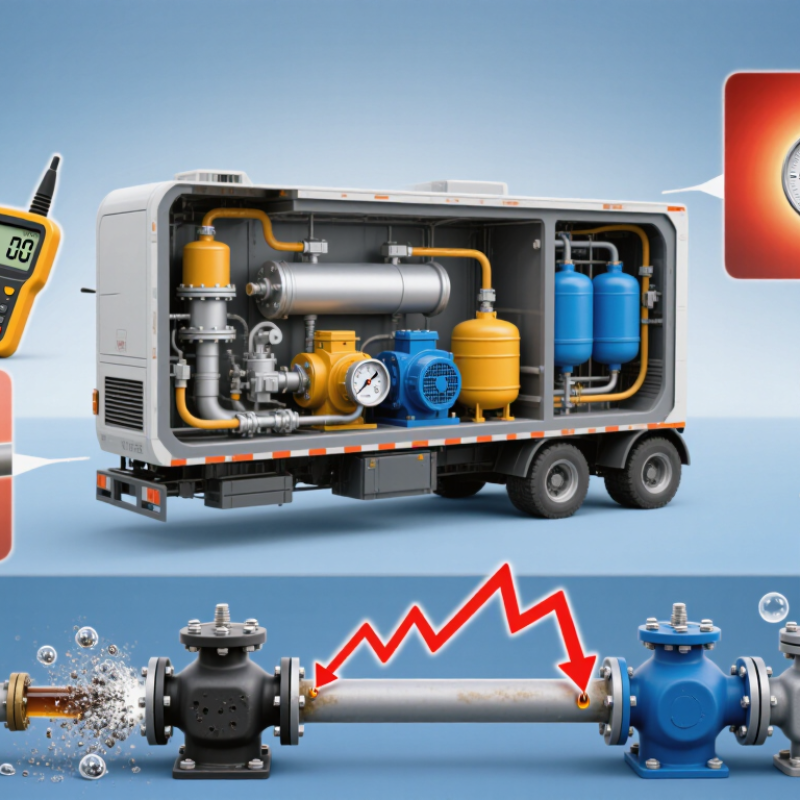
What Are Common Failures in Hydraulic Machinery from China?

Hydraulic Fluid Contamination: The Cause of 70–80% of System Failures

Hydraulic machinery from China can suffer familiar failures: valve sticking, pump wear, cylinder leakage, and slow actuator movement. The country of manufacture is rarely the only factor. Fluid cleanliness, storage, assembly, and maintenance usually decide reliability.

Industry maintenance studies commonly attribute 70–80% of hydraulic system failures to fluid contamination. The National Fluid Power Association identifies particles, water, and chemical degradation as major contamination risks. A few visible grains can damage a precision spool. Smaller particles are worse. They circulate unnoticed and polish metal surfaces inside pumps and valves.

ISO 4406:2017 classifies hydraulic cleanliness by counting particles at 4, 6, and 14 microns. A workshop may report clean-looking oil, yet laboratory testing can show an unacceptable code. That gap deserves attention. Technicians should inspect filter indicators, sample oil during scheduled service, and check reservoir breathers after dusty operations. Milky fluid suggests water ingress. Dark, sharp-smelling fluid may indicate overheating or oxidation. Replacing a clogged filter helps, but it cannot remove contamination already trapped in hoses and actuators. In practice, many maintenance plans are too optimistic. They record operating hours, but ignore particle counts, moisture exposure, and the cleanliness of replacement oil.

Common Failure Attribution in Hydraulic Machinery

Hydraulic-fluid contamination is widely reported as the cause of approximately 70–80% of hydraulic system failures. The remaining 20–30% may involve other factors, including component wear, overheating, seal damage, incorrect installation, and maintenance issues.

Pump Cavitation and Wear: How Pressure Below NPSH Damages Chinese Machinery

Pump cavitation is a frequent failure in hydraulic machinery from China, especially when inlet pressure falls below the required NPSH. Vapor bubbles form near the impeller eye, then collapse violently inside the pump. The damage sounds like gravel inside the casing. Pitting appears on impeller blades, clearance increases, and flow becomes unstable. The U.S. Department of Energy reports that pumping systems can consume 25–50% of industrial facility electricity, so repeated cavitation also creates a costly efficiency problem.

Hydraulic Institute standard ANSI/HI 9.6.1 separates available NPSH from required NPSH and stresses proper operating margins. In practice, engineers should measure suction pressure, liquid temperature, flow rate, and elevation rather than trust a catalog value alone. A small suction strainer blockage can reduce pressure sharply. Long, narrow inlet piping creates the same risk. On some Chinese-built units, inconsistent pipe alignment or rough internal surfaces may worsen turbulence. This is not always a manufacturing defect; poor installation is often involved.

Wear inspection should include the impeller, wear rings, shaft seal, and bearings. Vibration trends are useful, but they cannot replace pressure measurements. The DOE Pumping System Assessment Tool recommends checking system curves and operating points before changing components.

A larger motor may hide the symptom, not fix the cause. NPSH calculations also contain uncertainty. Temperature changes, clogged filters, and fluctuating tank levels can invalidate a neat calculation. That uncomfortable detail is easy to overlook.

Seal Failures: Effects of Heat Above 80°C and Pressure Spikes

Seal failures are common in hydraulic machinery from China, especially when heat and pressure changes are poorly controlled. Above 80°C, elastomers may harden, soften, or lose elasticity. The actual limit depends on material, fluid, and exposure time. ISO 4413 recommends controlling hydraulic temperature because excessive heat accelerates seal degradation and fluid oxidation.

A useful field reference is the European Sealing Association’s technical guidance, which identifies temperature, pressure, and installation damage as major sealing risks. Pressure spikes can force a seal into the clearance gap. This causes extrusion, nibbling, and sudden leakage. A gauge may show normal operating pressure while a valve shift creates a short spike. Too brief to notice.

ISO 3601 defines critical dimensions for O-rings, but correct sizing alone cannot prevent failure. ISO 4406 also shows why contamination matters: each cleanliness-code increase represents roughly a doubling of particle concentration. One small metal particle can cut a hot seal during rapid movement.

Maintenance teams should record peak temperature, pressure traces, fluid age, and leakage location. I have seen operators replace seals repeatedly without checking valve timing. That approach wastes parts. It also hides the real fault.

A better inspection looks for flattened edges, blistering, hard surfaces, or spiral cuts before selecting a replacement material.

Valve Malfunctions: ISO 4406 Cleanliness Codes and Particle Control

Valve malfunctions are common failures in hydraulic machinery from China, but contamination is often the real cause. During field inspections, I have found metal dust, sealing fragments, and dried flushing fluid inside valve bodies. A sticking spool may cause slow movement, pressure loss, or sudden actuator motion. Small particles matter.

ISO 4406 cleanliness codes provide a practical measurement system. The code reports particle levels at 4, 6, and 14 micrometres per millilitre of oil. For example, 18/16/13 indicates fewer particles than 21/19/16. The correct target depends on valve sensitivity, operating pressure, and manufacturer requirements. A new machine is not automatically clean. Assembly debris can remain in pipes, while an open reservoir can absorb dust overnight.

Particle control should begin before commissioning. Flush the circuit, install suitable filtration, and keep hose ends capped during assembly. Use clean sampling bottles and collect oil from a live return line, not the reservoir surface. An ISO 4406 laboratory test is more reliable than judging oil by appearance. Oil can look bright and still damage a precision spool.

I once blamed a defective valve before checking the return filter. The filter held a thin layer of metallic powder, and the valve worked normally after proper cleaning. That mistake remains useful. Maintenance teams should record cleanliness codes, filter condition, and sampling dates. Inconsistent records make recurring failures difficult to prove.

Maintenance Gaps: Why 3,000–5,000 Operating Hours Matter for Reliability

What Are Common Failures in Hydraulic Machinery from China?

Maintenance Gaps: Why 3,000–5,000 Operating Hours Matter for Reliability

Hydraulic machinery often fails after maintenance has been postponed, not because of one dramatic design error. Between 3,000 and 5,000 operating hours, filters, seals, hoses, and pump clearances deserve close inspection. This is a practical warning range, not a universal legal limit. Actual timing depends on load, temperature, fluid cleanliness, and duty cycle.

The U.S. Department of Energy’s Operations and Maintenance Best Practices guide reports that preventive maintenance can reduce maintenance costs by roughly 12–18% compared with reactive work. That advantage disappears when inspections become paperwork only. ISO 4406 also shows why fluid cleanliness matters: small particles can accelerate valve wear, damage servo surfaces, and increase internal leakage. A cloudy reservoir is already a bad sign.

Field technicians should record pressure, case-drain flow, oil temperature, vibration, and filter differential pressure before the 3,000-hour point. At 5,000 hours, checking only the outside of a pump is insufficient. Open the filter housing. Inspect metal debris. Measure seal compression. These details expose failures early. Industry maintenance surveys often identify contamination as a leading cause of hydraulic breakdowns, although exact percentages vary by application and reporting method. That uncertainty matters. Replacing parts on schedule may feel safe, but without oil analysis and trend data, it can become expensive guesswork.

FAQS

What causes most hydraulic system failures?

Contamination commonly causes 70–80% of hydraulic failures. Particles, water, and degraded fluid can damage pumps, valves, seals, and cylinders. Small particles matter most. They may circulate invisibly.

How can dirty hydraulic fluid damage precision components?

Particles can make a valve spool stick or polish metal surfaces inside a pump. This increases internal leakage and slows actuator movement. One visible grain may already be harmful.

Can clean-looking oil still be contaminated?

Yes. Clear oil can contain particles smaller than the eye can see. Laboratory particle counting provides better evidence than appearance alone. Visual inspection is useful, but incomplete.

What signs suggest water or heat damage?

Milky fluid often suggests water entry. Dark fluid with a sharp smell may indicate overheating or oxidation. A cloudy reservoir needs attention. Waiting may worsen the damage.

What maintenance checks should technicians perform?

Check filter indicators, reservoir breathers, oil temperature, pressure, vibration, and case-drain flow. Sample oil during scheduled service. Also inspect metal debris inside filter housings.

When should major hydraulic components receive closer inspection?

Between 3,000 and 5,000 operating hours, inspect filters, seals, hoses, and pump clearances closely. This is a warning range, not a fixed rule. Conditions can change it.

Is replacing a clogged filter enough?

No. A new filter cannot remove contamination trapped inside hoses, actuators, or other components. Flush contaminated areas when appropriate. Otherwise, old debris may return.

Why can scheduled maintenance still fail?

Some plans record operating hours but ignore particle counts, moisture exposure, and replacement-fluid cleanliness. That creates false confidence. Parts may be replaced too early or too late. Trend data would help, but many teams still lack it.

Conclusion

Understanding what are common failures in hydraulic machinery is essential for improving reliability and reducing unexpected downtime. Hydraulic fluid contamination is responsible for an estimated 70–80% of system failures because dirt, water, and metal particles can damage pumps, valves, and actuators. Pump cavitation and premature wear may occur when inlet pressure falls below the required NPSH, causing vibration, noise, and internal surface damage. Seal failures are also frequent, especially when operating temperatures rise above 80°C or when sudden pressure spikes exceed component limits.

Valve malfunctions are often linked to poor particle control and failure to maintain suitable ISO 4406 cleanliness codes. Even small contaminants can obstruct precision passages and reduce control accuracy. Finally, inadequate maintenance can shorten equipment life, particularly when inspections, fluid checks, filtration, and component replacement are neglected. Scheduling thorough maintenance every 3,000–5,000 operating hours helps identify developing problems early, preserve performance, and improve the long-term dependability of hydraulic systems.

Oliver

Oliver

Oliver is a seasoned marketing professional with a wealth of expertise in driving brand awareness and engagement. With a deep understanding of our company's product offerings, he consistently delivers high-quality content that enriches our professional blog. His insights not only shed light on......