In the realm of heavy equipment operations, minimizing downtime plays a crucial role in enhancing productivity. The industry faces constant challenges, ranging from equipment malfunctions to inefficient work schedules. Understanding how to reduce downtime in heavy equipment operations can significantly impact project timelines and costs.
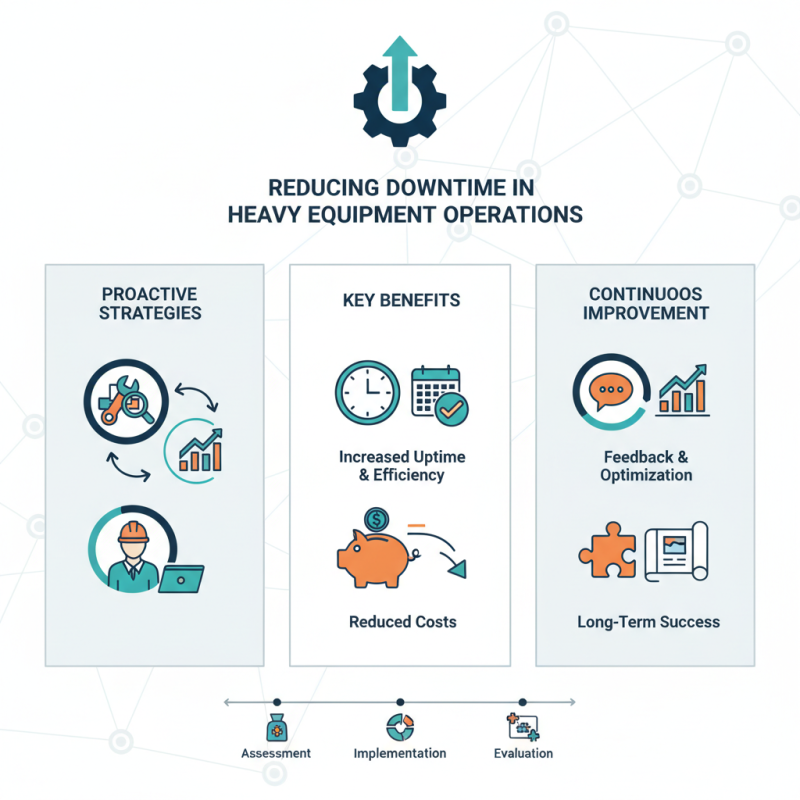
Companies are increasingly adopting innovative strategies to tackle these challenges. Predictive maintenance practices can help identify potential issues before they escalate. This proactive approach allows teams to address problems efficiently and minimize disruptions. Moreover, investing in operator training enhances skills and promotes better machinery handling.
However, while these strategies are effective, they require ongoing evaluation. Not all solutions work universally for every company. Frequent feedback and adjustments are essential. Recognizing areas for improvement is crucial to developing a robust uptime strategy. Addressing downtime not only boosts operations but builds a foundation for long-term success.
Downtime in heavy equipment operations is a significant challenge in China. This issue impacts productivity and increases operational costs. Various factors contribute to this dilemma. Equipment failures, maintenance delays, and labor shortages are primary concerns. Weather conditions also play a role, especially during harsh winters or rainy seasons. These elements can halt operations unexpectedly.
Considering the effects, the economic implications are far-reaching. Delayed projects lead to budget overruns and affect timelines. This can erode client trust and diminish market competitiveness. The reliance on outdated machinery further complicates the situation. New technologies can improve efficiency but require substantial investment and training. Addressing these challenges demands a focus on preventative maintenance. However, many companies struggle to implement effective systems.
Moreover, training the workforce on new protocols is vital. Yet, the continuous evolution of technology often leaves workers unprepared. Investing time and resources in training is essential but frequently overlooked. Ultimately, businesses need to reflect on their strategies for minimizing downtime. This introspection could lead to innovative solutions and improved operational resilience.
Predictive maintenance is crucial for heavy equipment operations in China. It helps to identify potential issues before they become significant problems. This proactive approach reduces downtime, ultimately saving time and money. Using sensors and data analytics, operators can monitor equipment health in real-time. This allows for timely interventions and repairs.
Implementing these strategies requires careful planning. Operators should establish a baseline for equipment performance. Regularly comparing current data against this baseline is essential. Identifying trends in wear and tear is also necessary. However, not all operations have the expertise to analyze data effectively. This gap can lead to missed opportunities for maintenance. Additionally, employees must be trained to understand new technologies. Without proper training, even the best systems may fail.
Moreover, equipment reliability can sometimes be unpredictable. Factors like environmental conditions and operator behavior impact performance. Relying solely on technology might not capture all variables. Therefore, combining human insight with machine data is vital. This balanced approach can enhance maintenance strategies and reduce the likelihood of unexpected downtimes. It’s a challenging yet rewarding process that requires ongoing evaluation and adaptation.
In the realm of heavy equipment operations, reducing downtime remains a critical challenge. A recent industry report indicated that equipment downtime can cost companies up to $250,000 per hour. To combat this issue, companies are increasingly investing in modern technologies such as the Internet of Things (IoT) and artificial intelligence (AI). These technologies provide valuable insights into equipment performance and maintenance needs.
IoT devices can monitor equipment in real time, gathering data on usage patterns and potential failures. For example, predictive maintenance uses this data to foresee problems before they occur. Studies show that predictive maintenance can reduce downtime by up to 30%. However, reliance on technology also requires skilled personnel to interpret the data accurately. Not all companies have the necessary expertise to leverage these advanced systems effectively.
AI enhances this further by analyzing vast amounts of data to identify trends. It can optimize schedules and streamline workflows, potentially increasing overall productivity. However, it’s crucial to recognize that not all implementations yield immediate benefits. Training and adjustment periods may hinder initial performance. Investing in these technologies presents both opportunities and challenges, necessitating a careful and realistic approach.
In the heavy equipment sector, training is essential. Data shows that companies investing in workforce training can reduce operational downtime significantly. A study from the International Construction and Equipment Association (ICEA) indicates that effective training programs can lead to a 30% decrease in equipment downtime.
Enhancing skills among workers boosts productivity. Skilled operators handle equipment with more care. They perform tasks efficiently, reducing the likelihood of mechanical failures. A survey found that only 52% of operators felt adequately trained for their roles. This gap suggests room for improvement in workforce development strategies.
Moreover, ongoing skills development is vital. Organizations must prioritize continuous education. Workers need updates on new technologies and operating procedures. Investing in training can improve retention rates among skilled workers. Reports indicate that equipped teams are 25% more likely to stay in their positions. This stability is crucial for minimizing disruptions in operations.
In recent years, Chinese industries have adopted innovative strategies to reduce downtime in heavy equipment operations. A notable case study comes from the manufacturing sector, where predictive maintenance is revolutionizing operations. According to a report by the China Machinery Industry Federation, 30% of machine failures are now predicted before they occur, leading to a 20% reduction in unplanned downtime. This proactive approach can save companies millions annually.
Another impactful initiative is the implementation of real-time monitoring systems. These systems track equipment performance and identify issues before they escalate. For instance, a leading construction firm used these technologies and reported a 25% increase in equipment utilization. However, the initial investment can be significant, and not all companies adapt quickly to these technologies.
**Tips:** Regular training for staff on new systems is crucial. Ensure all team members understand the technology. Also, periodically review and analyze downtime causes. This continuous improvement can yield further benefits. Reflecting on where processes break down can lead to insights that technology alone may not provide.
: The main challenge is downtime, which significantly impacts productivity and increases operational costs.
Key factors include equipment failures, maintenance delays, labor shortages, and adverse weather conditions.
It leads to budget overruns and delays, which can erode client trust and harm market competitiveness.
Companies are investing in the Internet of Things (IoT) and artificial intelligence (AI) for better equipment monitoring.
IoT devices monitor equipment in real time, providing data for predictive maintenance and preventing potential failures.
Not all companies have the expertise to interpret data from advanced systems, hindering effective use.
Training enhances worker skills, leading to reduced downtime and improved productivity in equipment operation.
Only 52% of operators feel adequately trained, indicating a need for better workforce development strategies.
Continuous education improves retention and boosts workforce stability, essential for minimizing operational disruptions.
They need to reflect on their strategies for reducing downtime and invest in effective training and technology integration.
In the context of heavy equipment operations in China, downtime presents significant challenges, affecting productivity and operational efficiency. To address this, understanding how to reduce downtime in heavy equipment operations is crucial. Key strategies include implementing predictive maintenance practices that leverage data analytics to anticipate equipment failures, thus minimizing unexpected outages.
Moreover, investing in modern technology, such as the Internet of Things (IoT) and artificial intelligence (AI), plays a pivotal role in streamlining operations and reducing delays. Enhanced training and skills development for the workforce further ensure efficient equipment management. Successful case studies from various Chinese industries illustrate the effectiveness of these strategies in achieving significant downtime reduction, ultimately leading to improved performance and competitiveness in the sector.

Aksurion Hydraulic